
PV String Harness Buying Guide: What Solar EPCs andProject Buyers Should Check Before Ordering

Introduction
In a solar PV project, every cable connection matters. While solar modules, inverters, and mounting structures often receive the most attention, the DC-side wiring system plays a critical role in project safety, installation efficiency, and long-term power generation performance. One important component in this system is the PV string harness.
A PV string harness is more than a simple cable assembly. It is a pre-assembled wiring solution designed to connect solar module strings, combiner boxes, inverters, branch connectors, and other PV system components. For EPC contractors, solar developers, installers, and equipment buyers, choosing the right PV string harness can help reduce field wiring errors, shorten installation time, improve connection reliability, and support stable system operation.
However, not all PV string harnesses are the same. Buyers need to check cable size, voltage rating, current capacity, connector compatibility, certification requirements, harness layout, environmental resistance, and supplier capability before placing an order.
This buying guide explains what solar project buyers should know before purchasing PV string harnesses and how to choose a reliable supplier for residential, commercial, industrial, and utility-scale PV projects.
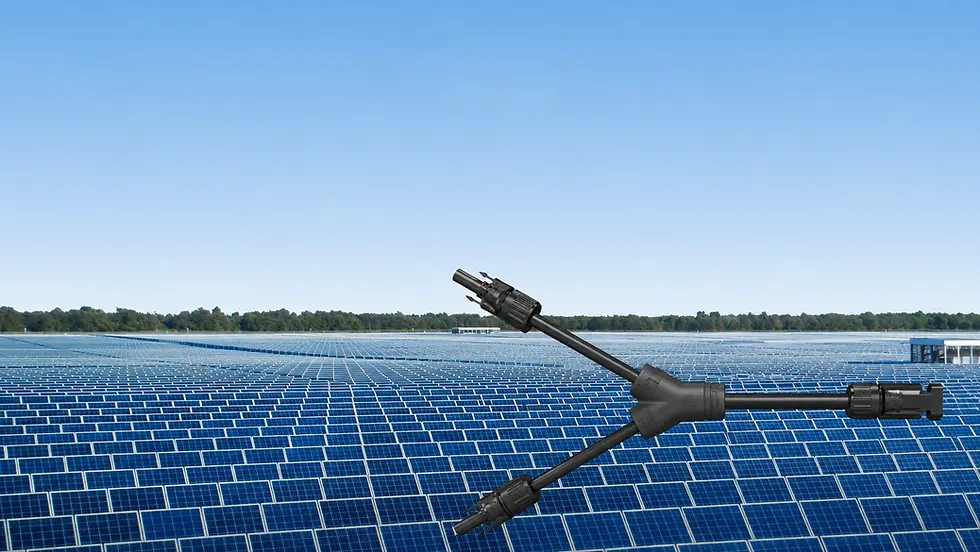
What Is a PV String Harness?
A PV string harness is a pre-assembled cable harness used in photovoltaic systems to connect multiple solar modules or strings together. It usually includes PV cables, connectors, branch connectors, terminals, inline fuse connectors, labels, and other customized components depending on the project design.

Instead of cutting, crimping, and connecting cables manually on site, a PV string harness is manufactured according to the project wiring layout before delivery. This helps installers complete the DC wiring process more quickly and consistently.
PV string harnesses are commonly used for:
Connecting solar module strings
Connecting strings to combiner boxes
Connecting PV arrays to inverters
Combining or splitting DC circuits
Reducing on-site wiring work
Improving installation consistency
Supporting customized solar EBOS wiring systems
For solar projects with repeated wiring layouts, pre-assembled PV string harnesses can provide significant advantages in speed, accuracy, and quality control.
Why PV String Harness Selection Matters
A PV string harness may look simple, but it directly affects the reliability of the solar power system. Poor-quality cables, incompatible connectors, incorrect polarity, insufficient current rating, or weak crimping can lead to serious problems after installation.
For solar buyers, the right PV string harness can help achieve several important goals.
First, it improves installation efficiency. Pre-assembled harnesses reduce the need for manual cable cutting and connector assembly on site. This is especially important for large commercial rooftops and utility-scale solar farms where thousands of connections may be required.
Second, it helps reduce wiring errors. When harnesses are manufactured according to approved drawings, each cable length, connector type, polarity marking, and label can be prepared in advance. This reduces confusion during installation.
Third, it supports long-term system safety. A reliable PV string harness should be able to withstand outdoor conditions such as UV exposure, temperature changes, moisture, wind, dust, and mechanical stress.
Fourth, it can reduce maintenance risks. Clear labeling, stable connections, and project-specific harness design make troubleshooting and future maintenance easier.
For these reasons, buyers should treat PV string harnesses as an important EBOS component, not just a low-cost accessory.

Key Specifications to Confirm Before Buying PV String Harnesses
Before ordering PV string harnesses, buyers should prepare detailed project requirements. The more accurate the technical information, the easier it is for the supplier to provide the correct solution.
1. System Voltage Rating
The first specification to confirm is the system voltage. Many modern PV projects use 1000V or 1500V DC systems, depending on project size, inverter design, and local electrical requirements.
The PV string harness must be suitable for the system voltage. Using a harness with an unsuitable voltage rating may create safety risks and compliance problems. Buyers should confirm whether the harness, cable, connector, and related components are suitable for the required voltage level.
For utility-scale projects, 1500V DC systems are common in many markets because they can help reduce current, cable quantity, and overall balance-of-system cost. However, the harness design must still match the actual project requirements.
2. Current Rating
Current rating is another critical factor. The PV string harness must be able to carry the expected current safely under operating conditions.
Current requirements depend on module output, string configuration, parallel connections, fuse design, and inverter input requirements. If the harness current rating is too low, it may cause overheating, energy loss, or long-term reliability issues.
Buyers should provide the supplier with the maximum current per string, parallel string quantity, fuse rating if required, and inverter input design. This allows the supplier to recommend the correct cable size and connector configuration.
3. Cable Size
Cable size affects current capacity, voltage drop, installation flexibility, and system efficiency. Common PV cable sizes may include 4mm², 6mm², 10mm², and larger sizes depending on the project.
For small rooftop systems, 4mm² or 6mm² cable may be common in many applications. For longer cable runs or higher current designs, larger cable sizes may be required. Buyers should not choose cable size only based on price. A smaller cable may reduce initial cost, but it can increase voltage drop and reduce power output over time.
When choosing cable size, buyers should consider:
String current
Cable run length
Voltage drop requirement
Ambient temperature
Installation method
Cable tray or conduit design
Local electrical code
Project engineer recommendations
A reliable supplier should be able to produce harnesses according to the cable size specified in the project drawings.
4. Conductor Material
Most PV string harnesses use copper conductors because copper offers excellent conductivity, flexibility, and long-term electrical performance. In some large-scale solar projects, aluminum conductors may also be used in certain parts of the EBOS system to reduce material cost and weight.
If copper-to-aluminum transition is required, buyers should use proper transition components instead of direct improper connections. Direct copper-aluminum connections may create risks such as oxidation, galvanic corrosion, increased contact resistance, and overheating.
For PV string harness procurement, buyers should clearly confirm whether the project requires copper cable, aluminum cable, or a special CU-AL transition solution.
5. Connector Type and Compatibility
Connector compatibility is one of the most important points in PV string harness selection. A PV harness must match the connectors used on solar modules, inverters, combiner boxes, and other DC-side components.
Buyers should confirm:
Connector brand or compatible model
Male and female connector arrangement
Polarity
Connector locking design
Rated voltage and current
IP protection level
Temperature rating
Compatibility with module connectors
Connector mismatch can cause installation delays, poor contact, overheating, water ingress, or warranty issues. Buyers should never assume that all PV connectors are automatically compatible. Before mass production, drawings and samples should be checked carefully.
6. Harness Configuration
PV string harnesses can be customized in different configurations depending on system design. Common configurations include:
Multi-branch harness
Inline fuse harness
Extension cable harness
Whip cable assembly
String-to-combiner harness
Module-to-module connection harness
Customized EBOS harness
The correct configuration depends on how the solar modules are arranged, how many strings need to be connected, and how the power is transmitted to the combiner box or inverter.
For large projects, buyers should provide wiring drawings, string layout diagrams, and installation requirements before ordering. This helps the supplier manufacture the harness accurately.
7. Cable Length
Cable length seems simple, but it is one of the most common sources of installation problems. If the harness is too short, installers may not be able to complete the connection. If it is too long, extra cable may need to be tied, managed, or protected on site.
Buyers should confirm the exact length of each cable branch based on module layout, mounting structure, cable routing, and combiner box location.
For customized PV string harnesses, it is best to provide:
Main cable length
Branch cable length
Connector-to-connector distance
Tolerance requirement
Label position
Cable routing instructions
Drawing confirmation before production
Accurate cable length helps reduce waste, installation time, and field modification work.
8. Inline Fuse Requirement
Some PV string harnesses require inline fuse connectors to protect circuits when multiple strings are connected in parallel. The fuse rating should match the project design and electrical protection requirements.
Buyers should confirm whether inline fuses are needed and provide the required fuse rating. Common fuse requirements may vary depending on module current, parallel string quantity, inverter input design, and local code.
Incorrect fuse selection may affect system protection and safety. Therefore, fuse requirements should be confirmed by the project engineer before ordering.
9. Environmental Resistance
PV string harnesses are installed outdoors for many years. They must withstand harsh environmental conditions. Buyers should check whether the cable and connectors are suitable for long-term outdoor use.
Important environmental performance factors include:
UV resistance
Moisture resistance
High and low temperature resistance
Flame resistance
Ozone resistance
Abrasion resistance
Salt mist resistance for coastal areas
Chemical resistance in special environments
Mechanical strength
For desert, coastal, high-humidity, high-temperature, or cold-region projects, environmental resistance becomes even more important. Buyers should inform the supplier about the installation environment so that suitable materials can be selected.
10. Labeling and Polarity Marking
Clear labeling helps installers identify each harness quickly and correctly. For large solar projects, labels can reduce installation mistakes and simplify maintenance.
Buyers can request customized labels for:
Positive and negative polarity
String number
Cable length
Connector type
Project name
Installation area
QR code or barcode
Customer part number
Good labeling is especially useful for EPC projects where installation teams need to work quickly and accurately on site.
Certifications and Standards Buyers Should Check
Certification requirements depend on the target market and project requirements. Buyers should confirm required standards before placing an order.
For the U.S. market, UL-related requirements are often important. For international PV projects, TÜV, IEC, and other regional standards may also be required. Different projects may have different requirements depending on local regulations, customer specifications, and authority approvals.

Buyers should check whether the supplier can provide relevant documents such as:
Cable certification
Connector certification
Test reports
Material datasheets
Product drawings
Quality inspection reports
Factory quality control documents
Traceability records
It is important to understand that a PV string harness is an assembled product. Buyers should not only check the cable certificate but also confirm connector quality, crimping process, assembly testing, and complete harness reliability.
Common Applications of PV String Harnesses
PV string harnesses can be used in many types of solar projects.
Residential Solar Systems
In residential rooftop systems, PV string harnesses help simplify module wiring and reduce installation time. Compact and reliable harness design is important because rooftop space is limited.
Commercial Rooftop Solar Projects
Commercial rooftops often require repeated wiring layouts across multiple module arrays. Pre-assembled harnesses help installers complete wiring faster and reduce errors.
Industrial Solar Installations
Industrial facilities may have larger system capacities and more complex wiring routes. Customized harnesses can help match specific project layouts and equipment requirements.
Utility-Scale Solar Farms
Utility-scale projects may involve thousands or millions of cable connections. PV string harnesses can improve installation efficiency, standardize wiring quality, and support large-scale project delivery.
Ground-Mounted PV Systems
Ground-mounted systems often have longer cable runs and outdoor exposure. Cable size, UV resistance, waterproof performance, and mechanical protection should be carefully considered.
Solar EBOS Systems
PV string harnesses are also used as part of broader electrical balance-of-system solutions. They may work together with PV cables, combiner boxes, disconnect boxes, inline fuse connectors, and branch connectors.
How to Choose a Reliable PV String Harness Supplier
Choosing the right supplier is just as important as choosing the right product. A good PV string harness supplier should understand solar project requirements and provide consistent manufacturing quality.
Here are the key factors buyers should evaluate.
1. Solar Industry Experience
A supplier with solar industry experience will better understand PV system requirements, connector compatibility, outdoor durability, and project documentation.
Buyers should ask whether the supplier has experience with residential, commercial, industrial, and utility-scale solar projects.
2. Customization Capability
Many solar projects require customized harness designs. A reliable supplier should support different cable lengths, cable sizes, connector types, branch layouts, fuse options, labels, and packaging requirements.
Customization is especially important for EPC contractors and project developers because every project layout can be different.
3. Quality Control Process
Quality control is critical for PV string harnesses. Buyers should check whether the supplier has clear inspection procedures for incoming materials, cable cutting, stripping, crimping, connector assembly, electrical testing, and final packaging.
Important quality checks may include:
Cable appearance inspection
Conductor inspection
Crimping quality inspection
Pull force test
Continuity test
Polarity test
Insulation resistance test
Waterproof performance check
Label and packaging inspection
A good supplier should be able to provide inspection records when required.
4. Engineering Support
For customized projects, engineering support can help buyers avoid specification mistakes. The supplier should be able to review drawings, confirm cable length, check connector arrangement, and provide professional suggestions before production.
Engineering support is especially valuable when buyers need customized string harnesses for large-scale projects.
5. Sample Approval
Before bulk ordering, buyers should request samples. Sample approval helps confirm cable length, connector compatibility, polarity, label design, packaging, and overall workmanship.
A sample may cost time at the beginning, but it can prevent costly problems during mass production and installation.
6. Production Capacity and Lead Time
Solar projects often have strict delivery schedules. Buyers should confirm the supplier’s production capacity, lead time, packaging method, and shipping experience before placing a large order.
For large EPC projects, stable delivery is extremely important. Delayed harness delivery can delay the entire installation schedule.
7. Documentation Support
Professional buyers often need technical documents for project approval and quality records. A reliable supplier should be able to provide product drawings, datasheets, certificates, test reports, and inspection documents when required.
Information Buyers Should Provide Before Requesting a Quote
To get an accurate quotation, buyers should provide clear technical information. If the requirements are incomplete, the supplier may not be able to recommend the correct solution.
Before requesting a quote, buyers should prepare:
Project country or market
System voltage
Maximum current
Cable size
Cable material
Cable length
Connector type
Harness configuration
Branch quantity
Fuse requirement
Polarity arrangement
Labeling requirement
Certification requirement
Quantity
Drawing or wiring diagram
Packaging requirement
Delivery schedule
Providing complete information helps the supplier quote faster and more accurately.
Common Mistakes to Avoid When Buying PV String Harnesses
Many procurement problems come from unclear specifications or choosing the wrong supplier. Buyers should avoid these common mistakes.
Mistake 1: Choosing Only by Price
A low price may look attractive, but poor-quality harnesses can create installation problems, power loss, safety risks, and maintenance costs. Buyers should compare material quality, testing process, certifications, and supplier capability, not only unit price.
Mistake 2: Ignoring Connector Compatibility
Connector mismatch is one of the most common problems in PV wiring. Buyers should confirm connector type, model, polarity, and compatibility before ordering.
Mistake 3: Providing Unclear Cable Lengths
Incorrect cable length can cause installation delays and additional field work. Buyers should confirm cable routing and provide accurate drawings.
Mistake 4: Forgetting Certification Requirements
Different markets have different certification expectations. Buyers should confirm project requirements before production.
Mistake 5: Skipping Sample Approval
For customized PV string harnesses, sample approval is highly recommended. It helps verify design details before bulk production.
Mistake 6: Ignoring Labeling
For large solar projects, unclear labels can cause wiring mistakes and maintenance difficulties. Customized labels can improve installation efficiency.
Mistake 7: Not Checking Supplier Testing Capability
A PV string harness should be tested before shipment. Buyers should ask about continuity testing, polarity testing, crimping inspection, and other quality checks.
Why Choose JUNDA-SOLAR for PV String Harness Solutions
JUNDA-SOLAR provides PV string harnesses and solar connection solutions for different photovoltaic applications. For project buyers, EPC contractors, installers, and solar equipment distributors, JUNDA-SOLAR can support customized PV harness solutions based on project requirements.
JUNDA-SOLAR’s PV string harness solutions can be designed for different solar project needs, including customized cable length, connector type, branch configuration, labeling, and packaging. Whether the project is a commercial rooftop system, industrial solar installation, or utility-scale solar farm, a properly designed PV string harness can help simplify installation and improve wiring reliability.
In addition to PV string harnesses, JUNDA-SOLAR can also support related solar EBOS products such as PV cables, solar cable harnesses, branch connectors, inline fuse connectors, combiner boxes, disconnect boxes, and customized solar cable assemblies.
For buyers who need project-based customization, JUNDA-SOLAR can help review technical requirements and provide suitable harness solutions according to system voltage, current rating, cable size, connector requirements, and installation layout.
PV String Harness Buying Checklist
Before placing an order, buyers can use the following checklist:
Have you confirmed the system voltage?
Have you confirmed the maximum current?
Have you selected the correct cable size?
Have you confirmed copper or aluminum conductor requirements?
Have you checked connector compatibility?
Have you confirmed male and female connector arrangement?
Have you checked polarity marking?
Have you confirmed cable length and tolerance?
Have you provided the harness drawing?
Do you need inline fuse connectors?
Do you need customized labels?
Do you need special packaging?
Have you checked certification requirements?
Have you requested samples before bulk order?
Have you confirmed testing and inspection requirements?
Have you confirmed delivery time?
This checklist can help reduce procurement risks and improve communication between buyers and suppliers.
Conclusion
A PV string harness is a small but important part of a solar PV system. It affects installation efficiency, electrical safety, wiring reliability, and long-term system performance. For solar project buyers, choosing the right harness requires careful attention to cable size, voltage rating, current capacity, connector compatibility, harness configuration, certifications, labeling, and supplier quality control.
Instead of treating PV string harnesses as ordinary cables, buyers should consider them as customized EBOS components that need professional design and manufacturing.
For EPC contractors, solar developers, installers, and distributors looking for customized PV string harness solutions, JUNDA-SOLAR can support project-based requirements with PV string harnesses, solar cable harnesses, PV cables, branch connectors, inline fuse connectors, combiner boxes, disconnect boxes, and related solar connection products.
If you are planning a solar project and need customized PV string harness solutions, contact JUNDA-SOLAR to discuss your project specifications and request a professional quotation.
FAQs About PV String Harnesses
1. What is a PV string harness?
A PV string harness is a pre-assembled cable solution used to connect solar modules, strings, combiner boxes, inverters, or other DC-side components in a photovoltaic system.
2. What is a PV string harness used for?
It is used to simplify solar wiring, connect PV strings, reduce installation work, improve wiring consistency, and support reliable DC-side electrical connections.
3. How do I choose the right PV string harness?
Buyers should confirm system voltage, current rating, cable size, connector type, harness configuration, cable length, certification requirements, and installation environment before ordering.
4. Can PV string harnesses be customized?
Yes. PV string harnesses can be customized by cable length, cable size, connector type, branch quantity, fuse rating, polarity marking, labeling, and packaging.
5. What cable size is commonly used for PV string harnesses?
Common PV cable sizes may include 4mm², 6mm², 10mm², and larger sizes depending on current rating, voltage drop, cable length, and project requirements.
6. Are PV string harnesses suitable for utility-scale solar projects?
Yes. PV string harnesses are widely used in utility-scale solar projects because they help improve installation speed, reduce field wiring errors, and standardize connection quality.
7. What is the difference between a PV string harness and a solar cable assembly?
A solar cable assembly is a broad term for pre-assembled solar cable products. A PV string harness is a specific type of solar cable assembly designed for PV string connection and DC-side wiring.
8. Do PV string harnesses need certifications?
Certification requirements depend on the target market and project specifications. Buyers should confirm whether UL, TÜV, IEC, or other project-specific requirements are needed before ordering.
9. Why is connector compatibility important?
Connector compatibility affects electrical contact, waterproof performance, installation safety, and long-term reliability. Buyers should confirm connector type and compatibility before mass production.
10. What information should I provide before requesting a quote?
Buyers should provide system voltage, current rating, cable size, cable length, connector type, harness layout, branch quantity, fuse requirement, quantity, certification needs, and project drawings if available.


Comments