
How to Source Medium Voltage Cable from China: The Ultimate Buyer's Guide
- RAY

- 6 hours ago
- 8 min read
Sourcing critical electrical infrastructure components requires zero compromises. When you need to source medium voltage cable from China, the stakes are incredibly high. A single failure in a 15kV or 35kV power distribution network can lead to catastrophic downtime, severe safety hazards, and millions of dollars in financial losses.
However, partnering with the right medium voltage cable supplier in China offers undeniable advantages. Chinese manufacturers have vertically integrated supply chains, massive production capacities, and highly competitive pricing. The challenge lies in distinguishing between a world-class medium voltage cable manufacturer in China and a sub-par trading company.
Whether you are an EPC contractor, a utility provider, or a procurement manager, this comprehensive guide will equip you with the knowledge to navigate the market. We will cover technical specifications, supplier qualification, quality control, and common procurement mistakes, ensuring your next utility or industrial infrastructure project is a success.

Understanding the Medium Voltage Cable Market in China
The Chinese cable manufacturing industry has evolved from producing basic low-voltage wires to engineering highly advanced, utility-grade medium voltage and high voltage power cables.
The Rise of Chinese Cable Manufacturers
Today, a top-tier electrical cable factory in China operates with state-of-the-art European extrusion lines (such as Troester or Maillefer) and fully equipped high-voltage testing laboratories. These facilities produce cables that meet or exceed rigorous international standards, including IEC, BS, VDE, and ICEA.
However, the market is highly fragmented. Thousands of companies claim to be an MV cable manufacturer, but many lack the heavy capital investment required for genuine medium voltage cable production, testing, and continuous curing (CCV) processes.
Why Sourcing Requires Extreme Due Diligence
In medium voltage applications (typically ranging from 6kV to 35kV), the electrical stress on the cable is immense. Unlike low-voltage cables, XLPE insulated MV cables require triple extrusion processes to apply the conductor screen, insulation, and insulation screen simultaneously. Any impurities or microscopic voids introduced during manufacturing will cause a phenomenon called partial discharge, leading to inevitable insulation breakdown over time.
Essential Technical Specifications for MV Cables
Before reaching out to a medium voltage power cable supplier, you must have absolute clarity on your technical requirements. A vague inquiry will result in inaccurate quotes and mismatched products.
Voltage Ratings and Classifications
Medium voltage refers to a specific range of electrical systems. When speaking with a 15kV cable manufacturer or a 35kV cable manufacturer, you must specify the voltage rating in the standard U0/U (Um)format, where:
Uo: The phase-to-ground voltage.
U: The phase-to-phase voltage.
Um: The maximum system voltage.
Common ratings you will need to specify include 3.6/6 (7.2) kV, 6/10 (12) kV, 8.7/15 (17.5) kV, 12/20 (24) kV, and 18/30 (36) kV.
Conductor Materials: Copper vs. Aluminum Medium Voltage Cable
The choice of conductor material drastically affects the price, weight, and performance of your medium voltage underground cable.
Comparison: Copper vs. Aluminum Conductors
Feature | Copper Conductor (Cu) | Aluminum Conductor (Al) |
Conductivity | Excellent (Standard benchmark) | Approx. 61% of Copper |
Weight | Heavy (Harder to transport/install) | Lightweight (Easier to handle) |
Cost | High (Subject to LME market volatility) | Lower and more stable |
Flexibility | High (Less prone to breaking under stress) | Lower (Requires careful bending) |
Best Application | Confined spaces, high-load industrial plants | Long-distance utility distribution networks |
Insulation Types: XLPE vs. EPR
The heart of any medium voltage cable is its insulation.
XLPE (Cross-linked Polyethylene): This is the industry standard for most utility-grade medium voltage cable suppliers. It offers exceptional dielectric strength, low dielectric loss, and operates safely at continuous temperatures up to 90°C.
EPR (Ethylene Propylene Rubber): EPR insulation is highly flexible and resistant to treeing (microscopic insulation damage caused by moisture). It is preferred in harsh industrial environments, mining operations, and marine applications.
IEC 60502-2 and International Compliance
What is IEC 60502-2? IEC 60502-2 is the definitive international standard for extruded solid insulation power cables for rated voltages from 6 kV up to 30 kV. When you evaluate an IEC 60502-2 cable supplier, you are ensuring that the cable’s construction, dimensional tolerances, and test requirements align with global safety protocols. Always request the tender specification checklist to match these standards.

How to Choose a Medium Voltage Cable Supplier (Step-by-Step)
Selecting the right partner is a systematic process. Use this ordered step-by-step framework to execute a flawless medium voltage cable procurement strategy.
Define Detailed Tender Specifications: Before contacting any medium voltage cable exporter, document your exact requirements. Include voltage rating, conductor size, core count, insulation material, screening type, armor requirements, and target standards.
Conduct Initial Market Screening: Search for manufacturers with proven experience in your specific voltage class. An excellent 1kV cable maker is not automatically a qualified 25kV cable manufacturer. Look for companies specializing in high-voltage infrastructure.
Request Type Test Reports: Ask shortlisted suppliers for third-party Type Test Reports from internationally recognized laboratories (like KEMA, TÜV, or CESI) for the exact cable type you intend to buy.
Evaluate Production Infrastructure: Verify that the factory possesses a Continuous Vulcanization (CCV) line. Triple extrusion is mandatory for MV cables to ensure the semi-conductive screens and XLPE insulation bond perfectly without contamination.
Audit the Quality Control Laboratory: The supplier must have an in-house high-voltage testing lab capable of performing routine tests on 100% of the cable drums before they leave the factory.
Negotiate Terms and Metal Price Linkage: Because copper and aluminum prices fluctuate daily on the London Metal Exchange (LME), negotiate a clear pricing formula based on the metal base price at the time of order confirmation.
Arrange Pre-Shipment Inspection (PSI): Hire an independent third-party inspector (like SGS or Intertek) to witness the final factory acceptance tests (FAT) before the cable is loaded into containers.
Medium Voltage Cable Supplier Qualification Checklist
When you conduct a medium voltage cable factory audit, you need to look beyond the sales pitch. To separate genuine experts from superficial operations, use this stringent verification guide.
Essential Factory Audit Checklist:
Raw Material Sourcing: Who supplies their XLPE compounds (e.g., Dow, Borealis)? High-quality raw materials are non-negotiable for MV insulation.
Traceability Systems: Can the OEM cable manufacturer trace a finished cable drum back to the specific batch of copper rods and insulation pellets used on that day?
Faraday Cage Facility: Does the factory have a shielded room (Faraday cage) for conducting accurate partial discharge tests without electromagnetic interference from the outside environment?
Curing and Degassing Rooms: After extrusion, XLPE cables generate methane gas as a byproduct of cross-linking. Ensure the factory has proper heated degassing rooms to remove these gases before jacketing.
Export Certification Expertise: Verify that they have successfully exported to your specific region and understand local utility board approvals.
Production Capacity: Confirm they can meet your required lead time without outsourcing to smaller, unverified sub-contractors.
The Critical Role of Cable Testing and Quality Control
When you buy medium voltage cable from China, visual inspection is completely useless. The integrity of the cable is hidden beneath thick layers of jacketing and armor. Rigorous testing is your only guarantee of safety.
Routine Test Reports
Routine tests must be conducted on every single length of cable produced. Ensure your industrial power cable supplier provides documented proof of the following:
Conductor Resistance Test: Verifies the purity and cross-sectional area of the copper or aluminum.
High Voltage Test: Applies a voltage significantly higher than the operating voltage to ensure the insulation can withstand sudden surges.
The Partial Discharge Test
This is the most critical test for any XLPE medium voltage cable supplier.
Partial discharge occurs when microscopic voids, moisture, or impurities are trapped inside the insulation during manufacturing. Under high voltage, these voids ionize, slowly eating away at the insulation until a catastrophic short circuit occurs.
Common Medium Voltage Cable Procurement Mistakes (And How to Avoid Them)
Even experienced procurement managers can make costly errors when dealing with chinese cable manufacturers. Here are the top pitfalls to avoid:
1. Fixating Solely on Price Per Meter
If an armored medium voltage cable supplier offers a price significantly below the market average, be highly suspicious. They may be using undersized conductors (negative tolerance cheating), recycled copper, or low-grade insulation materials. The cost of a cable failure in a power distribution network far exceeds any initial savings.
2. Ignoring Cable Armor and Screening Requirements
Depending on your installation environment, cables must be protected from mechanical damage and electrical interference.
Screening: Copper tape or copper wire screens are mandatory to provide a uniform electrical field and a path for fault currents.
Armoring: If the cable is direct-buried, specify Steel Wire Armor (SWA) or Steel Tape Armor (STA). If it is a single-core cable, ensure they use non-magnetic armoring like Aluminum Wire Armor (AWA) to prevent overheating from eddy currents.
3. Underestimating Lead Time and Logistics
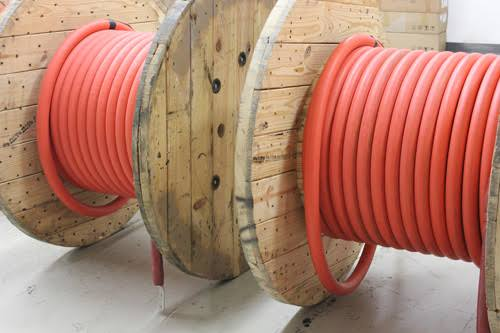
Manufacturing utility-grade cable is not an off-the-shelf process. From raw material procurement to degassing and final testing, production takes time. Furthermore, medium voltage cables are extremely heavy and require specialized steel or heavy-duty wooden drums. Miscalculating shipping logistics, drum dimensions for container loading, or bending radius limits during transport can derail your project timeline.
Importing and Logistics: Delivering MV Cable from China
Once your utility cable supplier has manufactured and tested the product, getting it to your site safely is the final hurdle.
Packaging and Cable Reels
Medium voltage cables cannot be bent sharply; doing so will shatter the semi-conductive layers inside. Ensure the supplier uses large-diameter drums that respect the minimum bending radius of the cable. For international sea freight, demand heavily reinforced wooden drums (properly fumigated with an ISPM-15 stamp) or steel drums. The cable ends must be permanently sealed with heat-shrinkable end caps to prevent moisture ingress during oceanic transit.
Managing Freight and Customs
Work with an experienced freight forwarder who understands heavy industrial goods. Ensure all commercial invoices, packing lists, bill of lading, and export certifications are flawlessly prepared. Discrepancies in HS codes (Harmonized System codes for electrical cables) can lead to severe delays and unexpected tariffs at your destination port.
FAQ: Sourcing Medium Voltage Cable from China
How do I choose the best medium voltage cable manufacturers in China?
Focus on infrastructure over marketing. The best manufacturers will willingly show you their CCV lines, their degassing chambers, and their high-voltage testing laboratories. Prioritize suppliers holding valid, third-party Type Test reports from KEMA or TÜV for the exact voltage class you need.
What is the difference between Type Tests and Routine Tests?
Type tests are exhaustive, destructive tests performed once on a specific cable design to prove the manufacturer's capability to meet a standard (like IEC 60502-2). Routine tests are non-destructive tests (like conductor resistance and partial discharge) performed on every single drum of cable before it leaves the factory to guarantee manufacturing consistency.
Can Chinese suppliers provide cables suitable for renewable energy projects?
Yes. Top-tier Chinese manufacturers are leading suppliers for global wind and solar farms. However, for renewable projects, you must specify UV-resistant outersheaths, water-blocking capabilities, and appropriate armor to withstand harsh outdoor environmental stresses.
How do I verify a medium voltage cable supplier's qualifications remotely?
If you cannot travel to China, hire a reputable third-party engineering inspection firm based in China. Have them perform a strict factory audit focused on machinery capabilities, quality control protocols, raw material traceability, and laboratory calibration records.
Conclusion: Securing Your Power Distribution Network
Successfully executing a medium voltage cable sourcing strategy requires a deep understanding of electrical engineering standards, rigorous supplier vetting, and uncompromising quality control.
By moving beyond simple price comparisons and focusing on manufacturing capabilities, testing protocols like partial discharge, and international standards such as IEC 60502-2, you can source world-class cables that ensure the longevity of your electrical infrastructure.
Do not treat medium voltage cables as simple commodities. They are the highly-engineered lifelines of your utility networks, industrial plants, and renewable energy grids. Approach your procurement with the technical diligence outlined in this guide, and you will mitigate risk while maximizing your project's return on investment.
Partner with JUNDA-SOLAR for Reliable Energy Infrastructure
At JUNDA-SOLAR, we understand that the backbone of any robust renewable energy or utility project is uncompromising quality. Whether you are scaling a commercial solar farm or upgrading an industrial power grid, making informed procurement decisions is vital. Apply the strategies in this guide to secure your supply chain, and ensure your next infrastructure project is powered safely, efficiently, and reliably for decades to come. Reach out to our team today to learn more about optimizing your electrical and solar procurement strategies.


Comments